Dada Gavand 1917–2012
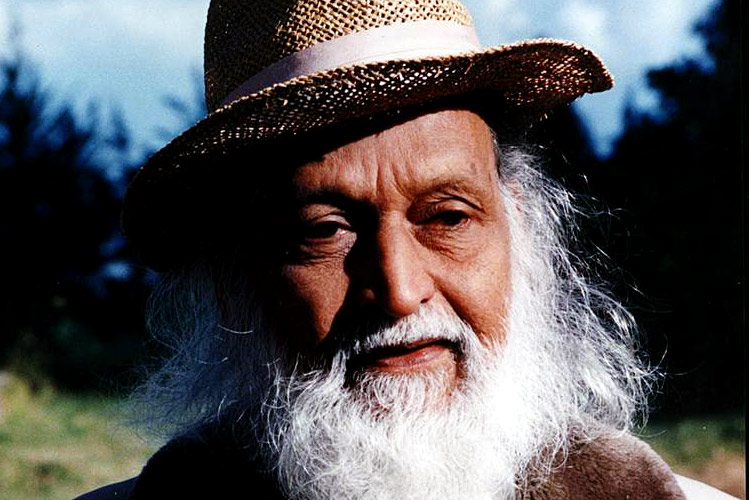
Portrait of Dada Gavand

Portrait hosted by realization.org (reproduced there from Dada Gavand’s Facebook page). Used here with attribution for educational summary.

Indian mystic · author · photographer

Dada Gavand

Dattaram Madhavrao Gavand · 1917–2012

A lifelong bachelor who left home at thirty-eight for solitude on Mount Sajjangad, and whose practice of watchful attention opened onto what he called intelligence beyond thought — not scripture, but seeing the mind as it is.

“Dada” = elder brother Bombay / Mumbai Tapovan Ashram, Satara

Life story

Summary drawn primarily from the biography reproduced on realization.org (sourced there from Dada Gavand’s Facebook page) and from his autobiography excerpts.

  1. 1917 · Bombay (Mumbai)

    Born Dattaram Madhavrao Gavand, eldest child; called Dada (“elder brother”). Early inner urge for spiritual understanding.

  2. Age 18 · Family business

    After his father’s untimely death, inherited and ran the family business successfully — yet grew disillusioned with wealth, prestige, and commercial culture, and saw marriage as a “glorified trap.” Remained a lifelong bachelor.

  3. Before 1955 · Seeking

    Read Theosophists such as Madame Blavatsky and Annie Besant. Personally met J. Krishnamurti, Ramana Maharshi, and the Mother of Pondicherry (Mira Alfassa). Secondary accounts also mention interaction with figures such as S. Radhakrishnan — treat those as secondary, not primary autobiography.

  4. ~Age 38 · 1955

    After settling his five sisters and only brother (getting them married and established), he left home in search of the significance of life. After wandering and testing, he concluded the search was within — and went to a tiny hut on Mount Sajjangad (Maharashtra) for intense self-observation.

  5. ~1955 · Awakening

    After roughly six months of solitary watchfulness in the hut, an unexpected inner “explosion” shattered the crystallized ego-mind structure — detailed in Intelligence Beyond Thought and excerpted on realization.org.

  6. ~19 years · Mahabaleshwar

    Continued in semi-solitude in a small cottage in Mahabaleshwar. Creativity increased manyfold; he began composing poetry.

  7. Later years · Teaching & travel

    Lived as mystic, traveller, photographer, and author of four books. Spoke and stayed in places including the United States and Canada (reflected in book dialogues and memoirs of students).

  8. 29 January 2012 · Samadhi

    Died at Borne, near Satara, Maharashtra. Memorial Tapovan Ashram (built by nephew Kiran Gavand) stands between Borne and Thoseghar villages, near Sajjangad — his samadhi site.

Awakening & practice

Dada’s sadhana was not mantra, scripture, or prescribed discipline. It was continuous watchfulness: standing back from thought, desire, and emotion to see the mind’s mechanism aloofly. Account below paraphrases and quotes his autobiography as published on realization.org.

Sajjangad hut

Solitude as laboratory

In 1955 he found a one-room hut (~7×9 ft) away from the temple noise. He cooked rice once a day, kept chores minimal, and spent the day attentive to every movement of thought — with no books, chants, or outer occupation.
Method

Aloof observation

He watched fear, sex-drive, attachment to family, and sentimentality without acting on them — seeing thoughts as energy-pockets that, when dissolved by attention, liberate energy rather than dissipate it.

“I had to be with myself wholly in order to face myself. I was confronted with the play of ceaseless and countless thought–desires. By watching the drama of thought-mind, without getting involved in it or carried away by it, I began to understand the whole content of myself.” — Dada Gavand, Intelligence Beyond Thought (via realization.org)
“Something inside me literally exploded, giving me the shock of my life. In a split second, a fountain of unknown energy sprang forth from within. This surprising energy flow was of a truly new kind… It felt soft, sensitive, joyful and dynamic yet peaceful.” — Same source; the breakthrough after months of watchfulness

Realization.org notes two words he stressed with special meaning: aloof and polyangular (multiangular attention that sees the whole landscape of mind, not one fragment at a time).

Teachings

Themes recurring across his books and the realization.org materials — not a system or religion.

Intelligence beyond thought

Thought is a useful instrument but a poor master. Freedom lies in a state of vibrant, thought-free attention — an impersonal intelligence that is not the product of ideas or goals.

Watchfulness

Meditation as constant vigilance of oneself: see desire, fear, and emotion as they arise, without analysis that restarts the mind’s loop.

Aloofness from thought & desire

Not suppression — detachment. Acting on every impulse keeps the ego’s fragmentary pattern intact; aloof seeing loosens it.

Not scripture-based

He had little interest in doctrines of enlightenment. The challenge is one’s own mind — “the final challenge for a human being is he himself.”

Polyangular seeing

Attention that is multiangular: contacting the whole mind-field at once, rather than the ego’s habit of one idea, one compartment at a time.

Photography as meditation

Nature photography paired with poetic captions invited kinship with Nature — seeing “the timeless through time,” a contemplative act rather than mere documentation.

“Silence is the gate to go beyond. We are missing the aesthetic beauty of silence, the fragrance of quietude and inner peace, because the mind has become overgrown and overactive.” — Attributed to Dada Gavand on the Tapovan memorial blog (2013)

Books

Four English titles commonly listed. Seller links are ordinary catalog pages (not affiliates). Availability and editions vary.

Autobiography · ~2006

Intelligence Beyond Thought

Exploding the Mechanism of Mind — full life story and the Sajjangad sadhana; the clearest first-person account of his awakening. Pilgrims Publishing / related editions (ISBN often given as 8177694502).

Exotic India · Amazon

Dialogues

Beyond the Mind

Conversations with seekers, artists, therapists, and householders — pointing to watchful attention as the way beyond the educated, self-centered mind. Early US helpers assisted with his first book under this title (per student memoirs).

Exotic India

Talks / reflections

Towards the Unknown

Talks from a three-year stay in the United States — liberation, family life, emotional problems, sexual energy, creativity — urging understanding of the mind mechanism before adopting techniques.

Exotic India

Photos + poetry · ~2008

Intuitive Intelligence

A Play — Within and Without: nature photographs with poetic captions, inviting deep kinship with Nature. Pilgrims Publishing (ISBN 9788177694307).

Pilgrims Book House · All titles on Exotic India

Photography

Alongside writing and speaking, Dada was a photographer. In Intuitive Intelligence, each image is paired with a short poetic passage — less a portfolio than a meditative invitation to see Nature without the usual verbal overlay. Contemporary accounts describe him as tall and lean, often in white, with long hair and a flowing beard — a presence that students associated with stillness as much as with teaching.

Portrait on this page: JPEG from realization.org/img/dada-gavand.2.750.jpg. No Wikimedia Commons portrait was found under his name (searched September 2026).

Tapovan Ashram & places

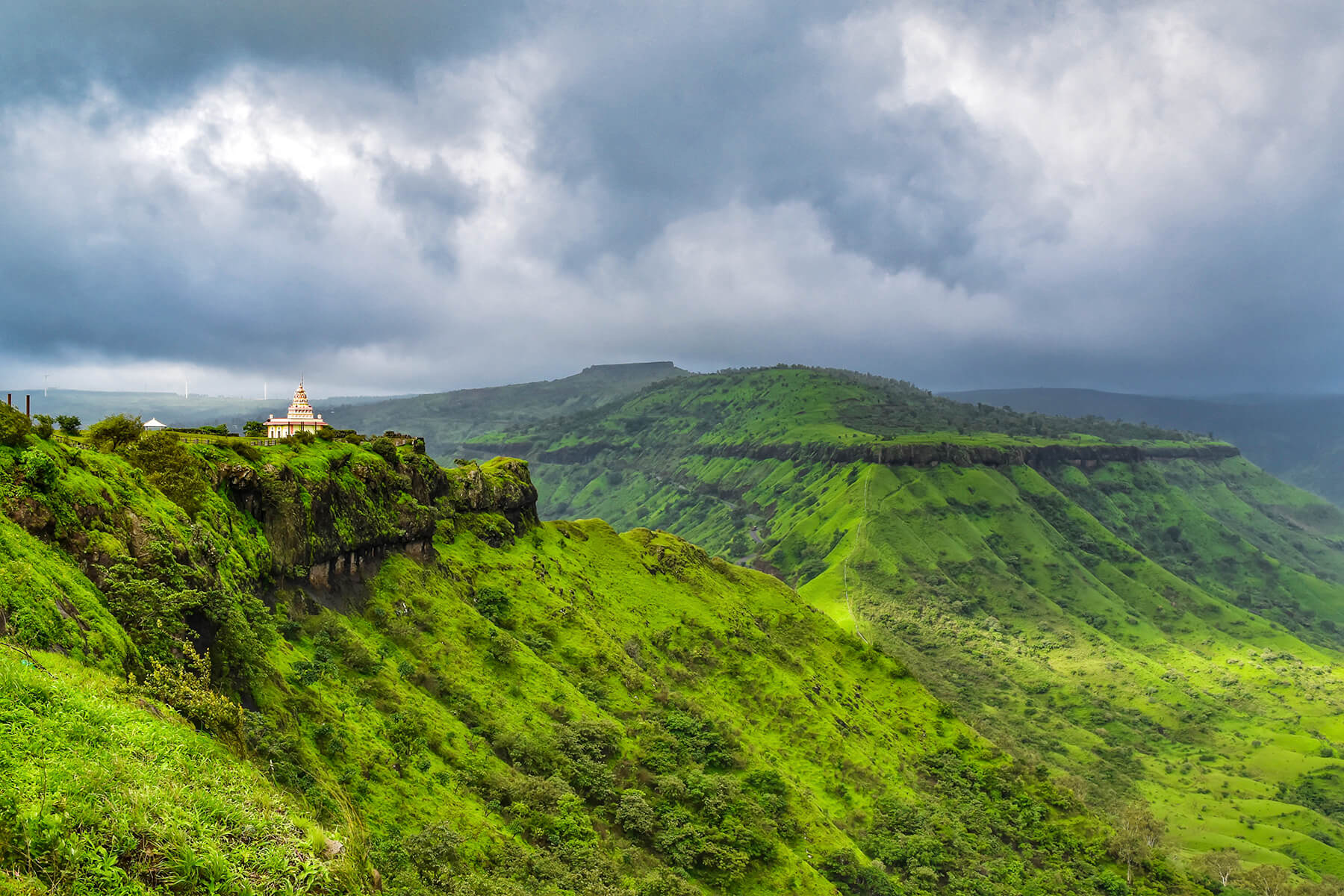
Sajjangad mountain landscape where Dada stayed in solitude

Sajjangad — image from realization.org (“Sajjangad Mountain where Dada stayed”).

Samadhi & memorial

Tapovan Ashram

Near Borne / Thoseghar, Satara district, Maharashtra — between the villages, near Sajjangad fort. Address published on realization.org:

Dadaji Gavand Foundation (proposed)
Tapovan Ashram
Borne Village, Thoseghar Road
Satara 415013, Maharashtra, India

A secondary site, mysticdada.org, is often mentioned on blogs as an official/memorial site; as of this page’s build it returned a gateway error and may be intermittently offline.

Nearby: Thoseghar waterfalls; Sajjangad is also associated with Samarth Ramdas (historical/religious context of the fort, distinct from Dada’s hut practice).

Further reading

Disclaimer

This page is an educational summary assembled for personal reference (Kotha / kosan.xyz). It is not affiliated with any estate, ashram, foundation, publisher, or Facebook page of Dada Gavand.

Quotes and biographical details are attributed to the sources linked below. Where secondary blogs add details (exact death date, Radhakrishnan meetings, ashram contacts), those are labeled as secondary and may need independent confirmation.